A complete colour change or finish, done in vinyl, without a single panel going near a spray booth.
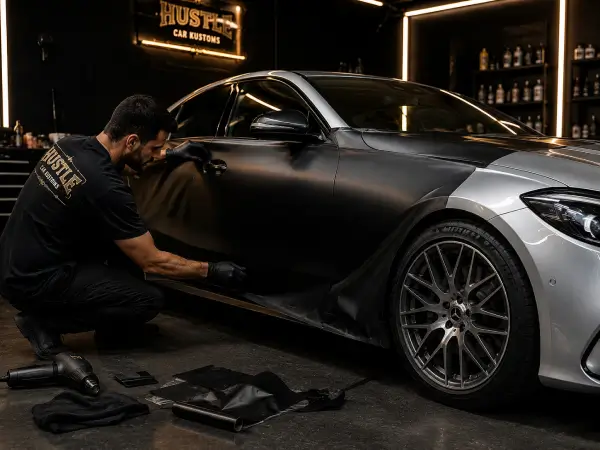
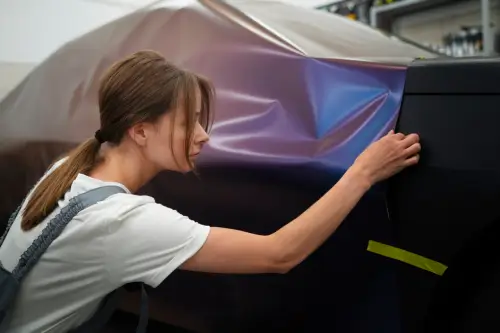
Vinyl wrap film is applied over every exterior panel, bonnet, roof, doors, guards, bumpers, the lot. It's cut and heat-formed around curves, mirrors and door handles rather than just stuck on flat, which is the difference between a wrap that looks factory and one that looks like it was done in a driveway. Done properly, panel gaps stay crisp and there's no film lifting at the edges six months later.
A wrap isn't paint. It sits on top of your existing paintwork as a separate layer, protecting it from minor scuffs and UV in the process, and it can be removed later by a professional without damaging what's underneath. That's a big part of the appeal, you get a completely different look without any of it being permanent.
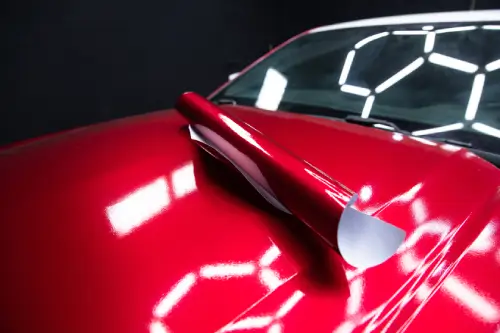
Reads closest to a factory colour change. Suits most cars.
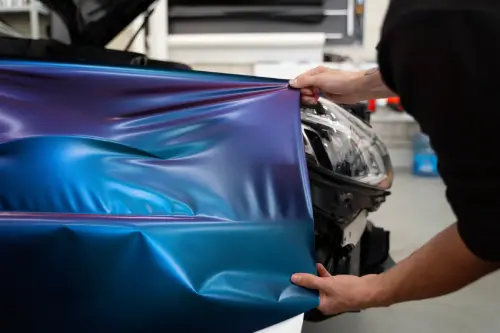
Sits between gloss and matte for a subtler look that still catches light.
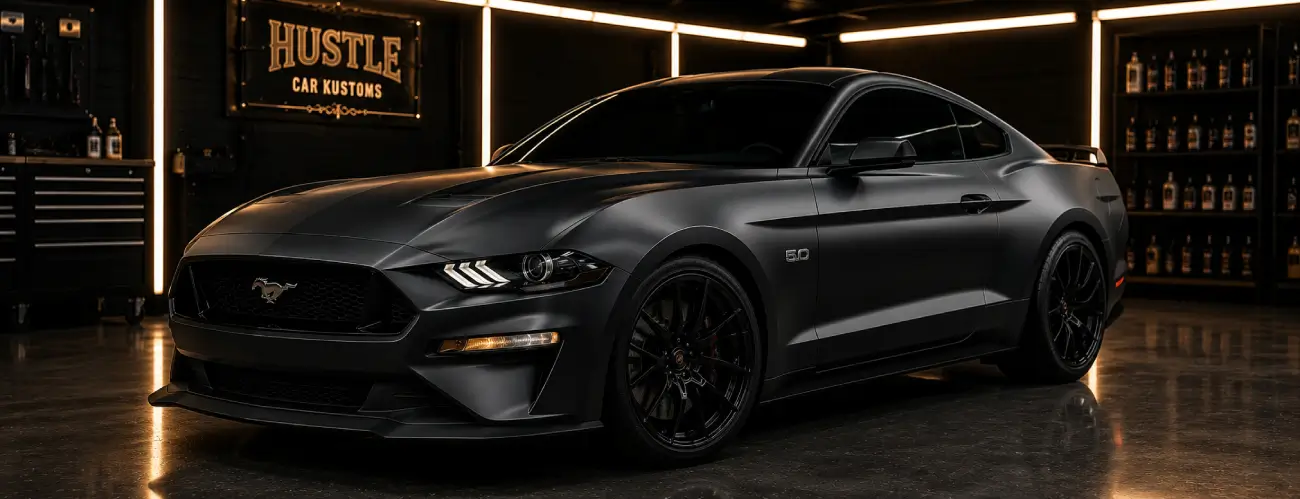
Flat, no-shine finish that shows every curve of the panel. Needs a bit more care.
A full wrap covers every exterior panel for a complete colour change. A partial wrap, roof, bonnet, mirrors, a set of stripes or a colour-block section, changes the look without the full cost or commitment. We'll talk through both if you're not sure which one fits your budget and the look you're after.
A quality wrap is generally faster to complete, fully reversible, and protects the paint underneath rather than replacing it. A respray is permanent and can correct deeper paint damage a wrap can't hide. If your paint's in good condition and you just want a different look, wrap tends to be the better call. If there's existing damage to fix, that's a different conversation, and we'll say so honestly.
Inspect the paint first. Existing chips, dents or heavy oxidation get flagged before wrap goes on.
Decontaminate and, if needed, correct the paint so the film has a clean surface to bond to.
Cut and pre-fit the film to your car's exact panels.
Apply panel by panel, heat-forming around curves, mirrors and handles for a clean edge.
Trim and seal every edge, then a final check over the whole car before handover.
Hand wash where you can, and skip automatic brush car washes, they're rougher on wrap film than on paint. Avoid parking directly under trees where sap and bird droppings can sit on the film for days. Fuel spills should be wiped off quickly, since some fuels can affect certain wrap finishes if left too long.
Straight answers, no sales pitch
No, not when it's applied and removed properly. The film sits on top of your existing paint and, if anything, adds a bit of protection against minor scuffs and UV while it's on.
Yes. Once the wrap is removed by someone who knows what they're doing, the original paint underneath is unaffected.
Full wraps typically start from Get a Quote, depending on vehicle size and finish. It varies with your car and the finish you're after, so the best move is a quick call so we can give you an accurate number.
Not really. It can disguise very minor imperfections, but existing dents, deep scratches or rust need addressing separately, wrap goes over what's already there.
Yes, a partial wrap, roof, bonnet, mirrors or a colour-block section, is a good middle ground if you want a different look without the cost of a full wrap.
Generally not negatively, since it's fully reversible. Some buyers actually see a well-done wrap as a bonus, provided the paint underneath is in good condition once it's removed.